If you search for a "fast first aid course near me", you will certainly discover lots of deals: express first aid in half a day, fast CPR refresher course in 2 hours, on-line concept adhered to by a quick functional session. For active workers and employers under pressure to satisfy conformity target dates, these promises are appealing. The big inquiry is whether a fast first aid certificate actually prepares someone to act when a life gets on the line.
I have actually spent years providing first aid and CPR training to work environments, child care services, and area teams. I have actually seen people walk right into a fast first aid training session totally to tick a box, and go out surprised at just how much they currently see around them: journey threats, bronchial asthma puffers without any spacers, elderly neighbours living alone. I have likewise seen the opposite, where a hurried course left students not able to keep in mind basic CPR actions simply weeks later.
Time is an aspect, however it is not the only element. The design and delivery of the course matter even more than the number of hours on the certificate.
What a First Aid Course Is In Fact Trying To Achieve
Before judging fast first aid courses, it assists to be clear regarding what "effective" suggests in this context. An excellent first aid and CPR course is not simply a lecture or a procedure to satisfy regulatory authorities. It ought to attain three things.
First, knowledge: acknowledgment of common emergency situations such as cardiac arrest, choking, stroke, anaphylaxis, severe blood loss, burns, seizures, asthma strikes, and head injuries. Learners must understand priorities and understand when to call emergency situation services.
Second, hands‑on skill: the capability to begin CPR promptly and with reasonable high quality, make use of an AED readily, control severe blood loss, place somebody in the recuperation setting, and support breathing problems while help gets on the means. For child care teachers, express child care first aid training need to additionally cover paediatric CPR, choking in babies and kids, and allergy and bronchial asthma monitoring plans.
Third, confidence under stress and anxiety: the peace to act as opposed to cold, and the judgment to adjust textbook steps to unpleasant, real‑world scenes. That confidence does not appear from concept alone; it originates from reasonable method and positive comments throughout training.
If a fast first aid course supplies all 3 end results, after that the shorter duration is not a problem. If it just covers concept at speed and hurries the practical components, then the certificate is little bit greater than paper.
How "Fast" Are Fast First Aid Courses Really?
The expression "fast first aid" covers a large range of styles. Some examples I encounter regularly:
A pressed express first aid course for individuals restoring their certificate. Most of the web content is alteration, and the students have seen it before.
Blended distribution where first aid concept is finished online, complied with by a brief face‑to‑face session focused on CPR training, AED use, and assessment.
Fast CPR courses that just cover CPR and defibrillation, generally for workers who currently hold a wider first aid certificate but must refresh their CPR annually.
Express child care first aid courses tailored to very early childhood years policies, with pre‑course analysis, scenario‑based workshops, and targeted assessments.
The small period listed on a course outline should not read as the only time you will certainly invest learning. In a modern-day first aid and CPR course, it prevails for half the learning to take place prior to you even stroll into the classroom, via on the internet modules, reading, or work environment drills. A 3 hour face‑to‑face session paired with 3 to 4 hours of on-line work can be much more efficient than a loosely structured 2 day course where individuals being in an area and take in little.
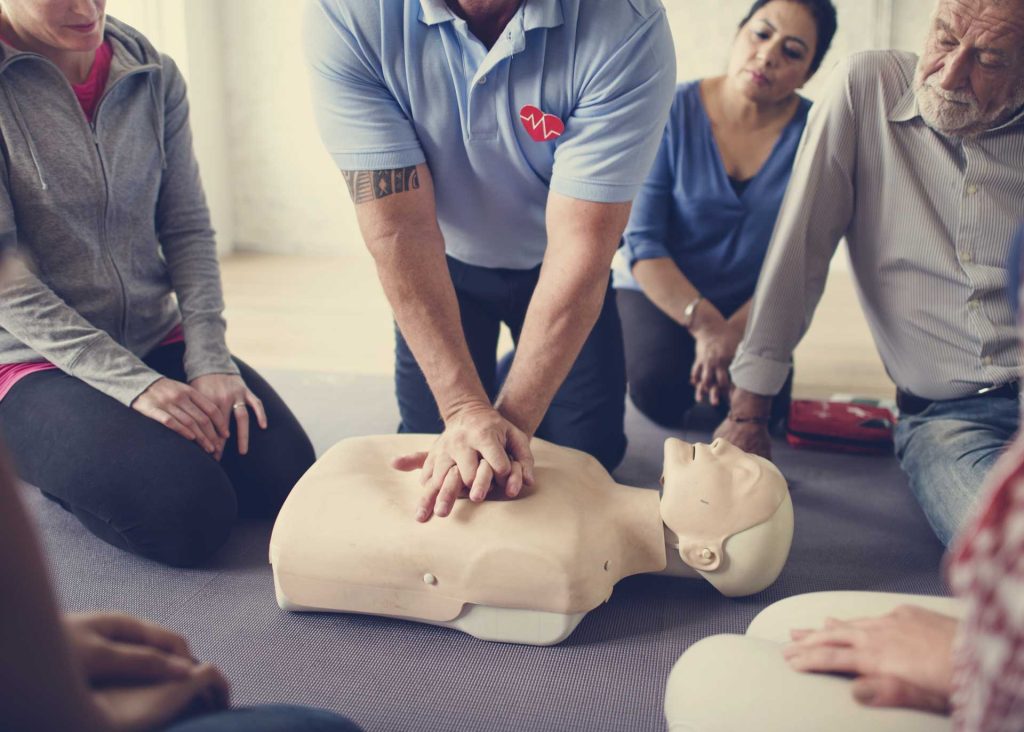
What issues is total learning time, how that time is made use of, and just how well it matches the student's background.
Short Courses vs Multi‑day Training: What Really Changes?
Multi day first aid courses definitely have benefits. There is more time for repeating, more possibilities for inquiries, and a slower pace that matches individuals that are anxious or unfamiliar with the web content. I have actually seen really worried participants, particularly older adults or people who did not finish school, bloom across 2 days as the product is duplicated and practiced.
On the various other hand, I have seen two day courses that waste time on lengthy video clips, off‑topic tales, or disorganized conversations. Individuals are away from job and household for an extended period, yet still leave unclear of the CPR compression proportion or the signs of stroke.
Fast first aid courses typically focus on effectiveness. The material is tighter, the trainer keeps a vigorous speed, and there is little room for drift. When this is done well, it values grown-up learners: clear objectives, appropriate examples, succinct explanations, immediate method. When done poorly, it feels like packing for a test, with people replicating answers right into a workbook they hardly understand.
From a skills perspective, CPR is the clearest test case. Study and experience both suggest that CPR quality starts to decrease simply a couple of months after training, regardless of whether somebody did a long or brief course. That is why several workplaces schedule CPR correspondence course every 12 months. The length of the original course is less important than exactly how frequently skills are revitalized and practiced.
When Fast First Aid Training Functions Well
Fast first aid and fast CPR courses can be very effective in specific circumstances. When I see excellent outcomes from a brief format, some common elements are present.
Learners are renewing, not gaining from scrape. If someone has actually currently completed a full first aid and CPR course within the past couple of years, an express first aid refresher really feels acquainted. They remember the wide steps. The fast structure runs their memory and develops technique rather than frustrating them.
Pre course preparation is real, not token. In strong combined courses, students total interactive online components with concerns, video clips, and circumstances prior to the class day. Trainers can then invest face‑to‑face time on concerns, demonstrations, and realistic simulations.
Group dimension is workable. Reliable fast first aid training relies upon lots of brief, focused technique rotations. When there are way too many people per manikin, or a single instructor is handling 20 participants, weak students can hide in the crowd and never obtain individual feedback.
Trainers are experienced and useful. A fast course rises or drops on the trainer's ability to focus attention on what issues, adjust descriptions to the team, and punctured lingo. In my very own CPR courses, I often remove the message down to one easy policy for ordinary -responders: "Set on the upper body, very little disruptions, get the AED on as soon as you can." Extra details are included just when the fundamentals are solid.
Workplaces assistance method. In some organisations, initial aiders make use of manikins in short tool kit sessions, run mock drills, and testimonial real events. A short first course works penalty due to the fact that it rests inside a living safety society rather than being the only direct exposure to first aid and CPR.
In these contexts, fast first aid courses are not a shortcut, they are a regimented way of delivering the very same learning outcomes in a tighter, adult‑friendly package.
When Fast First Aid Courses Fall Short
I have actually also walked into firms that bought the least expensive, fastest first aid certification available, and the gaps reveal instantly. In one case, an employee fell down with a seizure and none of the apparently trained first aiders understood to secure the head, time the seizure, or roll the individual when it finished. Their certificates depended on date, however their capability was not.

Compressed courses struggle in several situations.
Complete novices with reduced health literacy. If someone has never ever seen CPR executed, is unfamiliar with standard anatomy, or really feels extremely awkward around blood and injury, they normally require more than a fast session to absorb and integrate first aid principles. Expecting them to come to be positive responders in a solitary express first aid course sets them as much as fail.
People who are anxious or easily overwhelmed. Some students need time, repeating, and a safe area to ask what seem like "ridiculous" concerns. In a fast first aid and CPR training course, they might fall silent, allow others answer, and leave without resolving their fears.
Complex work environment threats. High danger markets such as stockrooms, producing plants, remote worksites, or atmospheres with chemical direct exposures commonly need scenario‑based technique that surpasses common first aid. Trying to squeeze that right into a short session generally suggests either the generic web content, the workplace‑specific drills, or both are compromised.
Childcare and institution atmospheres with special health and wellness requirements. Express child care first aid courses can function well for experienced teachers, yet new staff getting in early childhood years or handicap support functions take advantage of additional exercise with asthma spacers, anaphylaxis plans, seizure management, and the facts of emergencies involving small children. That deepness is difficult to get to if every section is rushed.
Box ticking culture. Where management's sole goal is "fast certification" at minimal cost, there is pressure to do the bare minimum. Individuals show up late, leave early, or work through the on-line part while distracted. The organisation can show auditors an impressive line of first aid certificates, yet in a real emergency, performance tells a different story.
Fast does not always imply ineffective, but the risk of shallow learning is greater when nobody is looking beyond the timetable.
What To Try to find In a Fast First Aid or CPR Course
If you are considering a fast first aid course or express CPR course, you can swiftly separate severe providers from shallow ones by inspecting a couple of crucial aspects.
Clear understanding results rather than vague promises. Credible companies call the specific units, such as standard workplace first aid or a thorough first aid and CPR course, and describe both understanding and skill requirements.
Blended learning with meaningful on-line material. If you are anticipated to complete pre‑course concept, it ought to include questions, scenarios, and short evaluations, not simply a PDF to skim. Great on the internet components help you arrive at the express first aid training session all set to practice.
Real functional evaluation, not simply attendance. A fast CPR course should still need you to demonstrate continuous compressions and ventilations for a practical period, use an AED fitness instructor, and take care of basic first aid situations. If a company tips that every person passes no matter efficiency, treat that as a warning sign.
Appropriate class dimensions and equipment. Ask about the variety of participants per manikin, specifically in CPR training. A ratio that permits you to spend just a couple of minutes on the manikin is not enough.
Trainer experience and support. Experienced fitness instructors will happily respond to thorough concerns about their first aid and CPR training classes. If the person on the phone can not discuss how the course runs or sweep aside concerns with "it is all in the video clip", look elsewhere.
This quick checklist applies whether you are reserving a one‑off express first aid course, organizing fast first aid training for an entire group, or looking for "fast first aid course near me" as an individual.
Can A person Actually Discover CPR in a Couple of Hours?
CPR is frequently pointed out as the skill that allegedly can not be instructed correctly in a short timeframe. My sight is a lot more nuanced.
The standard motor series of CPR compressions, especially upper body setting and deepness, can be educated within minutes. Individuals pick it up swiftly when they see and feel it. The obstacles are not normally technical however mental: worry of breaking ribs, first aid certificate Darwin stress over doing it "wrong", pain with mouth‑to‑mouth, or anxiety concerning lawful consequences.
In a focused fast CPR course, the majority of the moment is spent overcoming those barriers. Learners compress on a manikin up until they locate the rhythm and deepness. They exercise with face shields or with compression‑only CPR, talk about local guidelines, and talk through genuine cases. By the end, virtually everybody in the space can deliver sensible top quality CPR.
The limitation hinges on retention. Any type of CPR training, whether 2 hours or eight, discolors if it is not rejuvenated. That is why lots of standards suggest refresher CPR training every one year, also if official first aid certificates stay legitimate longer. Some markets are relocating to much shorter yet a lot more frequent CPR sessions, for example a quarterly fast CPR correspondence course of 30 to 45 mins embedded into security meetings.
So indeed, a person can learn useful CPR in a number of hours, as long as that understanding is strengthened on a regular basis. The problem is not the fast format, it is the one‑off nature of much first aid and CPR training.
Special Instance: Express Childcare First Aid Courses
Childcare and institution atmospheres include psychological weight and particular threats. When something goes wrong with a kid, even experienced adults can panic. Laws in lots of regions need early youth educators to keep existing first aid and CPR certifications, commonly with added components in asthma and anaphylaxis.
Express child care first aid courses have actually grown in feedback, encouraging protection of paediatric first aid in a single day, often with pre‑course e‑learning. I have actually trained many instructors with this layout. When the course is developed well, it is very useful: choking drills with infant manikins, role‑plays of epi‑pen management, mock first aid certificate Maitland play ground incidents, and discussions of actual cases.
The express layout fits instructors that already take care of minor injuries everyday and just need organized training, lawful clearness, and accredited abilities. It is much less suitable for new staff who have actually never ever held a less competent baby or seen a major allergic reaction. For them, added mentorship in the workplace is important, along with the official express childcare first aid course.
A strong childcare‑focused program covers not simply emergencies, however avoidance. Simple measures such as monitoring consuming, keeping nuts firmly, and maintaining bronchial asthma activity intends possibly avoid even more events than any kind of remarkable resuscitation. The very best express childcare first aid training consists of these everyday methods instead of concentrating only on worst‑case scenarios.
Fast Courses, Actual Emergency Situations: What Really Happens
When you run first aid courses for enough time, you hear back from people who needed to utilize their abilities. These tales are my real examination of whether fast first aid courses work.
One office worker who completed a mixed first aid and CPR course defined strolling into a health club altering room to discover a guy collapsed and not breathing usually. He bore in mind the simple chain: check response, phone call for assistance, begin compressions, obtain the AED. The real series was messy, but he maintained going till paramedics got here. His training session had actually lasted a solitary full morning, incorporated with online theory the week before.
Another trainee went to a fast CPR training course on a Friday and utilized it on Monday, when a youngster choked at a family members bbq. Her hands drank, but she remembered the actions for choking in youngsters and removed the blockage. That course was a pressed evening session targeted at moms and dads and grandparents. Very brief in period, really focused in material, absolutely important in its impact.
On the opposite side, I recall a worker in a big warehouse with a thick folder of certifications, consisting of a multi‑day first aid course from 2 years earlier. When his associate was squashed by a pallet, he iced up. No person was assigned as a clear very first aider. No normal drills happened. The size of his original training was unimportant because the skills had never been secured in practice.
These situations strengthen a difficult fact: a certificate, whether from fast first aid courses or extended programs, is just the starting point. The behaviors of scanning for dangers, thinking of what might go wrong, and emotionally rehearsing your response are developed over time.
How To Obtain The Best From Any Fast First Aid Course
If you choose that a fast first aid or express CPR course fits your routine, you can raise its performance significantly with some simple steps.
Arrive with some structures. Full any type of on the internet modules extensively. View a respectable CPR video clip from recognised organisations. Skim through your workplace emergency situation strategy. This way, the face‑to‑face session ends up being reinforcement and correction as opposed to an initial exposure.
Ask for practice, not simply description. When you feel unpredictable about a skill, inform the fitness instructor you would love to attempt it again. Great trainers invite this. I would much rather stay a couple of mins longer so someone can repeat an asthma spacer technique than have them walk out unsure.

Connect the material to your real setting. If you work around equipment, ask specifically concerning crush injuries and unrestrained blood loss. If you support older loved ones, talk through stroke acknowledgment and drops. Tailoring instances to your life makes information stick.
Plan for refresher courses from the beginning. Schedule a pointer well before your certificate expires. Speak to your manager concerning normal, short drills. Usage fast CPR refresher courses and tool kit speak with keep the memory cozy, not to gain from scratch again.
Share what you found out. Instructing others, also informally at home or at the workplace, is one of the toughest methods to cement knowledge. When you discuss the essentials of first aid and CPR to someone else, gaps in your own understanding come to be apparent, and you can resolve them while the content is fresh.
In my experience, individuals that follow these routines are the ones who advance in emergency situations, no matter whether their original class was 3 hours or three days.
A Balanced View Of Fast First Aid Certification
Fast first aid courses, express first aid training sessions, and compact CPR courses are not inherently substandard. They are devices. Made use of well, they let hectic adults gain crucial skills without giving up whole workweeks. Used thoughtlessly, they produce an incorrect sense of security.
When picking between a fast first aid course and a longer choice, the crucial questions are straightforward. How much previous exposure do the learners have? Exactly how strong is the provider's focus on sensible skills and evaluation? Will certainly the organisation support refreshers and drills later, or is this a one‑off occasion to satisfy compliance?
Certification is required. Competence is optional, unless you demand it. If you treat your first aid and CPR course as more than documentation, even an express layout can come to be a transforming point, the moment you chose that if a person collapses near you, you will recognize what to do and have the confidence to act.